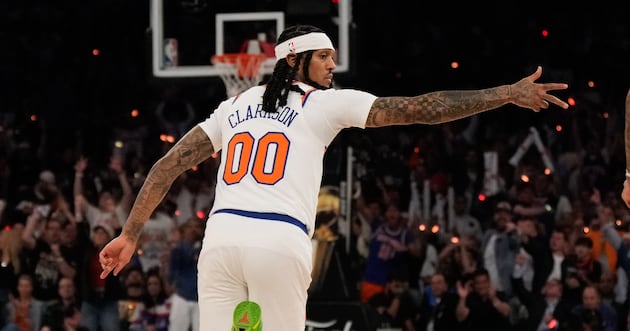
When the New York Knicks beat San Antonio in Game 5 on Saturday, they became the eighth different franchise to win a championship in as many seasons, tracing the line back to the Toronto Raptors’ 2019 title. That streak of eight unique champions in eight years underscores how the league has shifted from dynastic dominance to a landscape where any well-constructed team can rise to the summit.
During that eight-year stretch the league saw five clubs either claim their first championship or capture a title for the first time since before 1979 , the year the Jazz moved to Utah. Those clubs were the Raptors (2019), the Milwaukee Bucks (2021), the Denver Nuggets (2023), the Oklahoma City Thunder (2025) and the New York Knicks (2026). The Indiana Pacers came within a single game of adding their name to that list in 2025, falling short in the Finals.

The numbers reinforce the narrative of parity. In the last eight seasons, 43.3 % of NBA franchises have reached the Finals, and 60 % have appeared in the Conference Finals. For the Utah Jazz, the closest they have come to that elite tier was in 2021, when they fell in six games to the Los Angeles Clippers in the second round. That series remains the Jazz’s deepest playoff run of the parity era.
A key driver of this fluid competitive balance is the collective bargaining agreement that runs through the 2029-30 season. Because the CBA limits the ability of teams to lock up multiple star contracts for long periods, roster turnover has accelerated. Keeping a core intact for more than a few seasons is now the exception rather than the rule, which makes long-term dynasty building a steep challenge for every franchise.
For the Jazz, the path forward hinges on shrewd cap management and talent development. The Western Conference’s next few years are already shaping around the Thunder and the San Antonio Spurs, both of which could look markedly different by the time the 2025-26 season arrives. Utah will need to identify versatile players who can defend multiple positions, stretch the floor, and thrive in high-leverage playoff moments. Maximizing draft capital and cultivating home-grown talent will be as important as any free-agency move.
If the parity era endures for the remainder of the current CBA, the Jazz’s window to add their name to the list of 2020s champions remains open. A proactive approach to roster construction, combined with the league’s structural openness, could see Utah break through and claim the Larry O’Brien trophy before the era shifts again.
 Utah Jazz